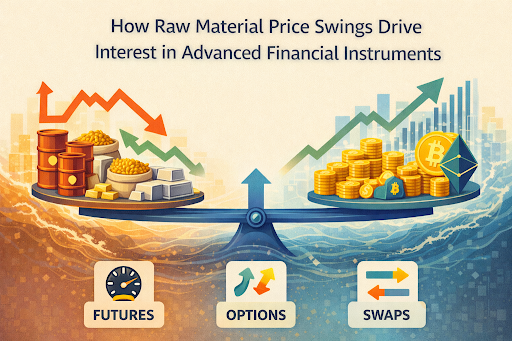
Raw materials such as crude oil, gold, and copper experience significant price swings, driven by supply disruptions, demand shifts, and macroeconomic factors. These fluctuations create both risks and opportunities for investors and businesses. In recent years, commodity prices have shown heightened volatility, with crude oil moving 5-10% in short periods due to geopolitical tensions and energy transitions.
This unpredictability pushes market participants toward advanced financial instruments for hedging and speculation. Platforms offering commodity derivatives provide tools to navigate these swings efficiently. This article examines how price volatility in raw materials fuels demand for derivatives like CFDs and futures.
The Drivers Behind Raw Material Price Volatility
Supply and demand imbalances are the primary culprits. OPEC+ production decisions can cut or add millions of barrels daily, swinging crude prices 10-15%. Weather events disrupt agriculture, while mining strikes affect metals such as copper, which are essential for electrification.
Macroeconomic factors amplify moves. Inflation above targets boosts gold as a hedge, while rate hikes strengthen the dollar, pressuring USD-priced commodities. Currency weakness in emerging markets spurs local buying, lifting demand.
Geopolitical risks add fuel. Trade disputes or conflicts in key regions, like the Middle East for oil or South America for copper, trigger sharp spikes. These events create uncertainty, driving volatility higher.
How Volatility Sparks Interest in Derivatives
Price swings make direct commodity ownership impractical – storage costs, spoilage for agriculture, or delivery logistics deter most. Derivatives solve this by offering exposure without physical holding.
Futures and CFDs allow hedging. Producers lock prices to protect margins, and consumers secure costs. A mining company shorts copper futures against inventory, offsetting drops.
Speculators thrive on volatility. Leverage in CFDs turns 5% crude moves into 50% gains at 10x. Perpetual contracts with funding rates enable 24/7 trading and capture global news.
Institutional adoption grows. Hedge funds use derivatives for portfolio balance, with $50 billion in commodity-linked assets recently. This demand reflects volatility’s dual nature – risk and reward.
Key Derivative Instruments for Raw Materials
Futures Contracts: Standardized agreements for future delivery, traded on exchanges. They hedge physical positions but require margin and rollovers.
CFDs: Mirror price moves without ownership, settling in cash. Leverage up to 20x and no expiry suit active traders.
Options: Rights to buy/sell at strike prices, limiting downside while keeping upside. Premiums cost, but volatility boosts value.
These tools manage swings. A $5 crude rise at 10x CFD yields $50 per $1,000 margin, hedging or speculating efficiently.
| Instrument | Leverage | Settlement | Best For |
|---|---|---|---|
| Futures | Up to 20x | Physical/Cash | Hedging long-term |
| CFDs | Up to 20x | Cash only | Short-term speculation |
| Options | Variable | Cash | Limited-risk plays |
Risks and Smart Approaches
Volatility cuts both ways. Leverage magnifies losses – a 5% drop at 20x wipes capital. Liquidations cascade in crashes, with 80% of retail traders losing money.
Fees erode edges. Spreads (0.1-0.5%) and funding rates add up. Over-trading in swings compounds costs.
Copy trading mitigates. Mirror pros with 80% win rates on commodity news, automating hedges. Choose a low drawdown (under 10%) for safety.
Conclusion
Price swings in raw materials driven by supply shocks, inflation, and geopolitics drive interest in advanced derivatives like CFDs and futures. They offer hedging, speculation, and leverage without ownership, turning volatility into opportunity. Use 5x-10x leverage, risk 1-2%, and diversify instruments. Copy trading aligns you with pros’ timing. In uncertain markets, derivatives aren’t optional – they’re essential for navigating commodity chaos.